A commitment to sustainability is one of our core values. Alongside maximising the value of our assets, we aim to contribute to the social and economic development of the areas in which we operate and to minimise our environmental impact, while always being open and transparent with all our stakeholders.
“Our purpose of developing mining for a better future has never been more relevant.
Advances in artificial intelligence, electrification, digitalisation and more resilient energy systems are increasing demand for copper while raising expectations of how it is produced.
Supplying these materials safely and responsibly is essential to meeting that demand and sustaining our long-term competitiveness.
Our continual focus on our purpose and desire to deliver long-term stakeholder value helps us to develop the multiple facets of sustainability: operating safely and developing our people's capabilities; responsible environmental management, particularly in water and energy; strong, trusting relationships with the communities around our operations; disciplined governance; and the effective use of technology to improve productivity and resource efficiency.”
Iván Arriagada
Chief Executive Officer
Double materiality assessment
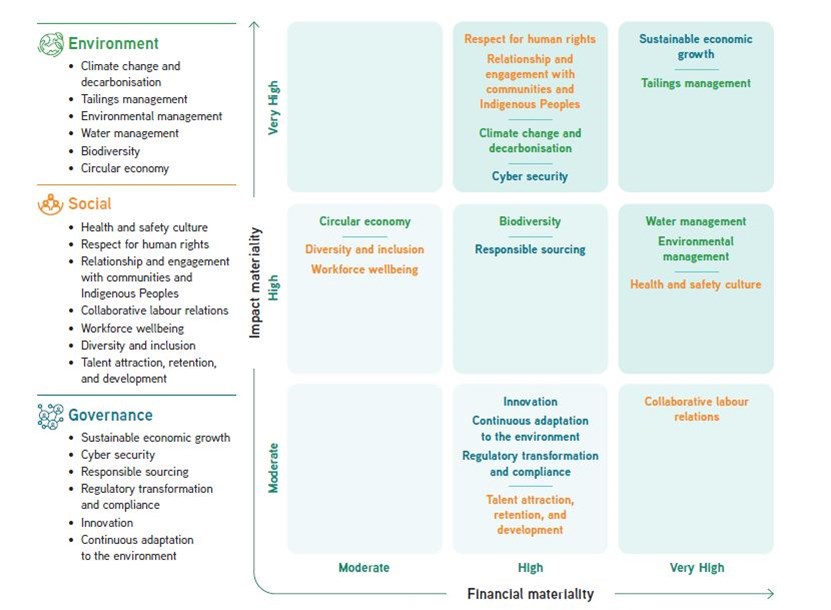
For the first time, in 2024, we defined our material issues under the guidelines of the new standard suggested by the European Sustainability Reporting Standards (ESRS): Double Materiality.
Critical environmental, social and governance issues were identified in this analysis, which is related to how the environment impacts the value of the Company (financial materiality) and how its activities affect the ecosystem in which it operates (impact materiality), allowing for better management of our risks and opportunities.
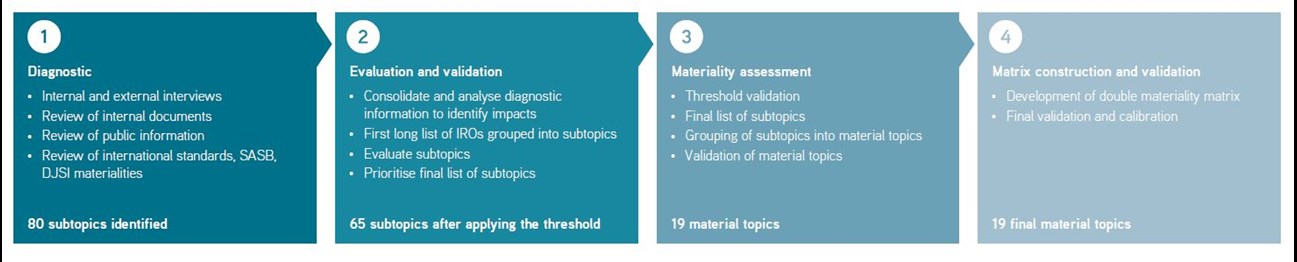
The process took six months and included a diagnostic analysis, gathering information from internal and external sources to identify impacts, risks and opportunities (IROs). A total of 17 interviews were performed with the managers of the Company and representatives of external organisations that promote advances in sustainability in the mining industry, such as the Chilean Mining Council, the ICMM and The Copper Mark.
The process also considered reviewing internal documentation such as reports, policies, management models and manuals, among other relevant and public source documents, such as national studies and surveys. Likewise, it included performing a benchmark on the material issues of four national and international mining companies considered leaders in sustainability. Additionally, we reviewed relevant international standards and assessments, such as S&P´s Corporate Sustainability Assessment, SASB, TCFD and GRI, therefore obtaining a comprehensive overview of Antofagasta regarding its activities, commercial relations and sustainability management.
Once this overview was completed, the process continued with the evaluation and validation of the IROs grouped into subtopics based on severity and probability factors, which were prioritised to obtain a final list of subtopics. At this stage, the “Bottom-up” method was used to identify the subtopic and related impacts for each material topic, which was worked on with professionals from the Company.
In total, 80 subtopics were considered in the materiality assessment, with 32 external impacts and 48 subtopics representing risks and opportunities for the Group’s activities. A total of 65 out of 80 subtopics were determined to be above the materiality thresholds. Once grouped, they resulted in 19 material topics, following internal meetings to validate the study’s initial findings.
Lastly, we defined thresholds to determine the subtopics considered material. These were addressed in a workshop that resulted in a list of 19 material topics, allowing for the subsequent calibration of topics and development of the double materiality matrix, which the Executive Committee validated.